Program design · Brand implementation · Web
Convivir Fund
A micro-grant fund I started for students who may not have a community cheering them on.
- Role
- Founder. Designed the program; built and deployed the site
- When
- May 2026 – present
- Built with
- Astro, Tailwind CSS, Netlify, Claude Code
- Collaborators
- Mai Inoue, graphic designer: logo and brand guide. DIY Girls: pilot partner and fiscal sponsor
- AI in the process
- Claude Code generated the first draft and later applied the brand guide; the identity came from a human designer
Why I started it
The decision to pursue a graduate degree was not one I made lightly. Without financial assistance, I was prepared to take out loans and dedicate every paycheck to covering tuition. Then someone stepped in and made that burden disappear. What followed changed my life in ways I hadn't anticipated.
With school covered and a paycheck coming in, I had room to breathe. I got my sisters a set of quality tennis rackets and running shoes, and watched them fall in love with their respective sports. I rescued a dog. I had the flexibility to simply live a little more freely. I realized that money is a very tangible thing, and that a specific, well-timed amount of it can quietly transform someone's life outside the classroom just as much as inside it.
I created the Convivir Fund because I wanted to give that back, specifically to students who may not have a community cheering them on. Sometimes all it takes is one person deciding that your potential is worth investing in.
Convivir is Spanish for "to live together." When I think of the word, the first thing that comes to mind is the feeling of being in conversation around a campfire, and that's the kind of warmth I want the fund to carry.
Designing the program
For months I was at a standstill, because I wanted to make sure everything was perfect before I launched. Then I overheard the team at DIY Girls having a hard time deciding which senior should get their single scholarship, so I walked up to them, told them I had $2,000 I'd been meaning to give out, and asked if they'd let me. DIY Girls became my partner for the pilot year: they helped find applicants, hosted the award presentation at their STEM Expo, and acted as fiscal sponsor, so I didn't have to wait to become a registered nonprofit.
Each grant is $500, given directly to one student. They aren't scholarships. They're meant for the things that keep students from fully committing to school, so I wrote the guidelines around the students I had in mind:
- Student athletes who want to play but can't afford equipment, uniforms, or fees
- Students facing food insecurity who are struggling to meet basic needs
- Student workers who need temporary relief so they can cut back their hours and focus on school
- Anyone who could use financial help with something that keeps them from committing to school
About 11 students applied. I looked for applications that focused on problems a scholarship couldn't help with, and I deliberately didn't ask for report cards or accolades. There are already resources that reward good grades, and that wasn't what this fund was for. I ran the review and selected the recipients myself, and I fund the grants by setting aside part of my paycheck.
Giving it a home online
Because the fund rests on one person deciding another person is worth investing in, I wanted the website to feel like there was a person behind it, and getting there took a few tries.
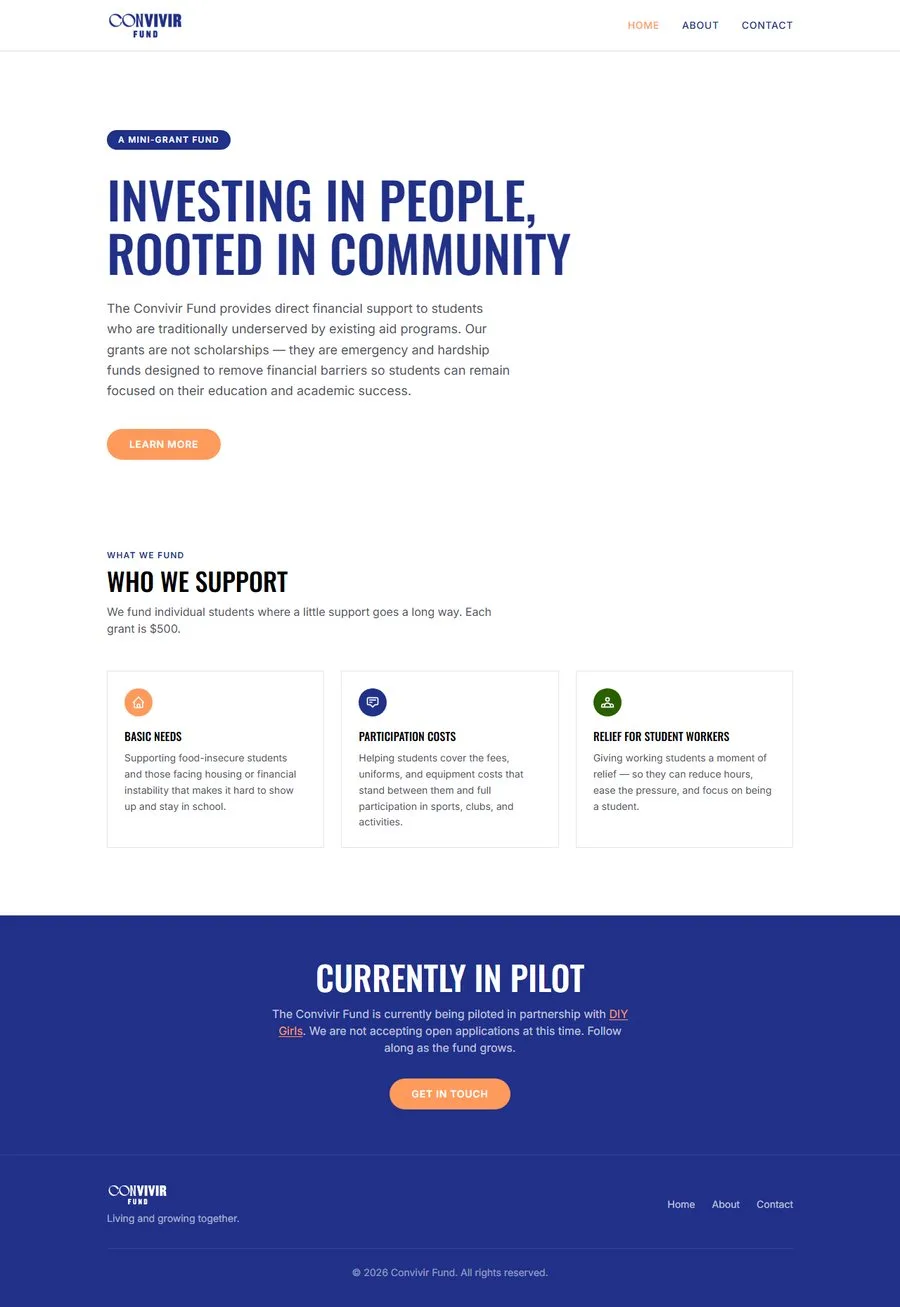
The first version worked, but it felt generic.
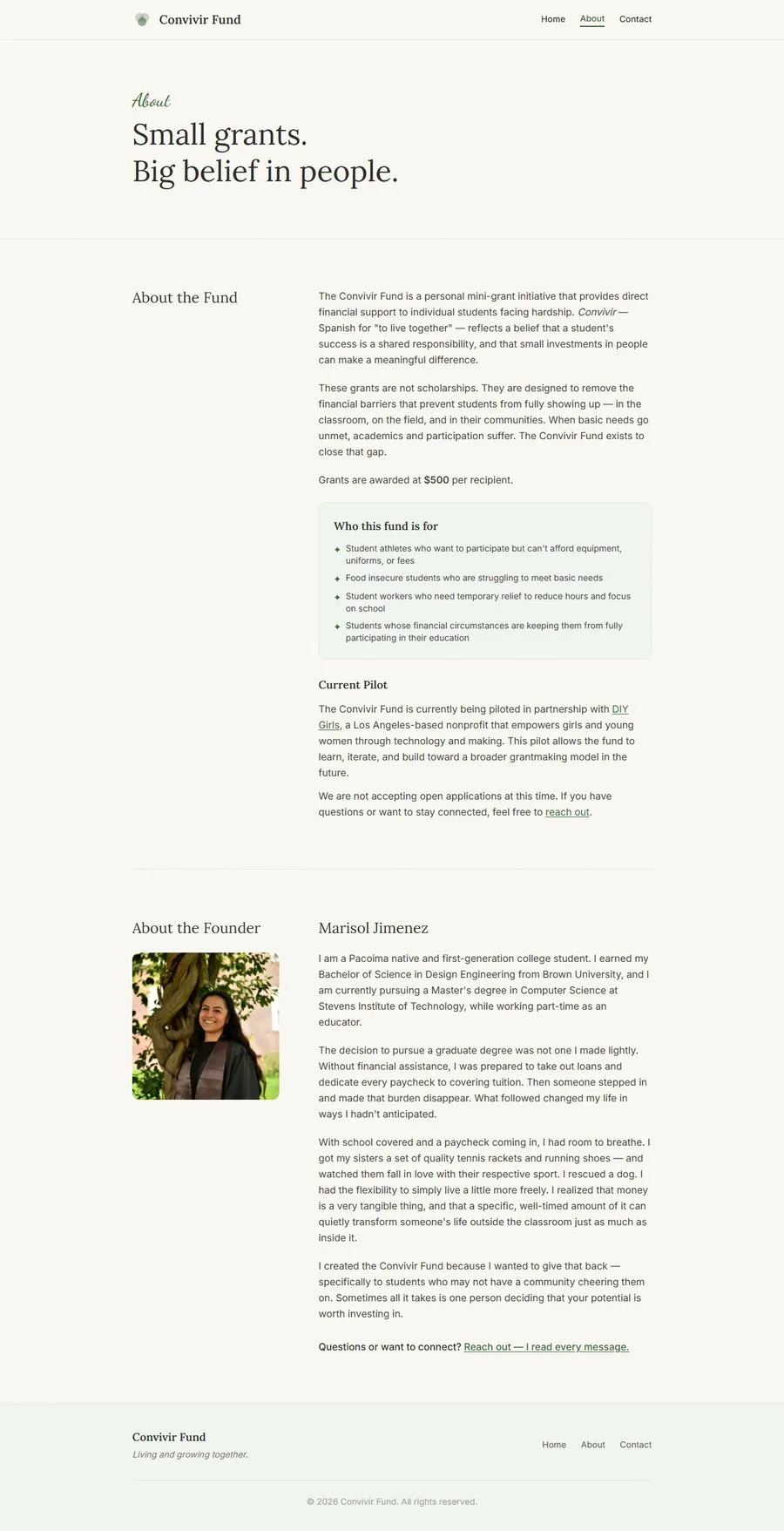
I built the first version of the site quickly by directing Claude Code. It was clean and usable, with sage green, a script-font eyebrow, and rounded cards, but it also looked like a template, and a generic site didn't say what the fund is about. So I hired graphic designer Mai Inoue to give it a real identity.
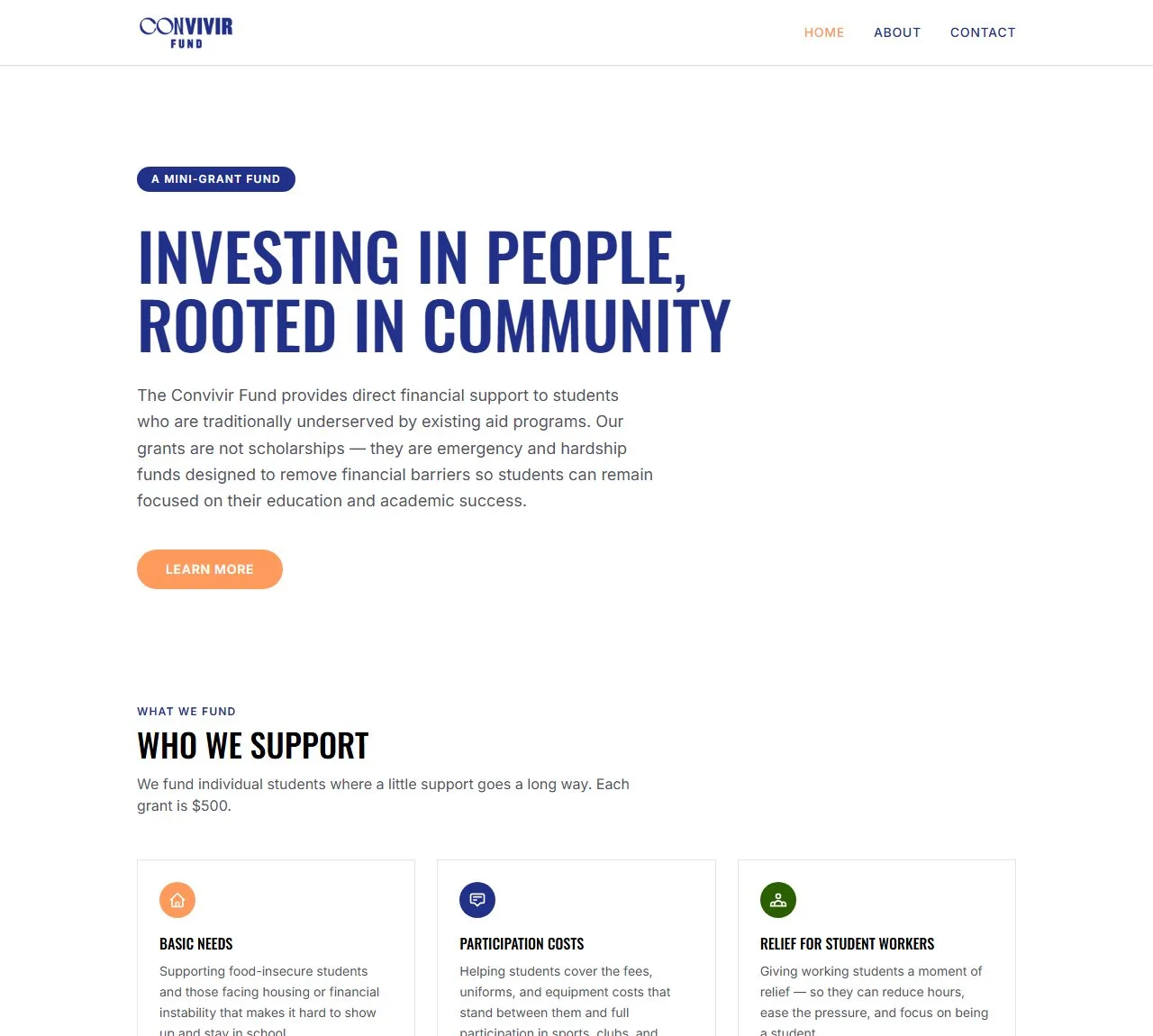
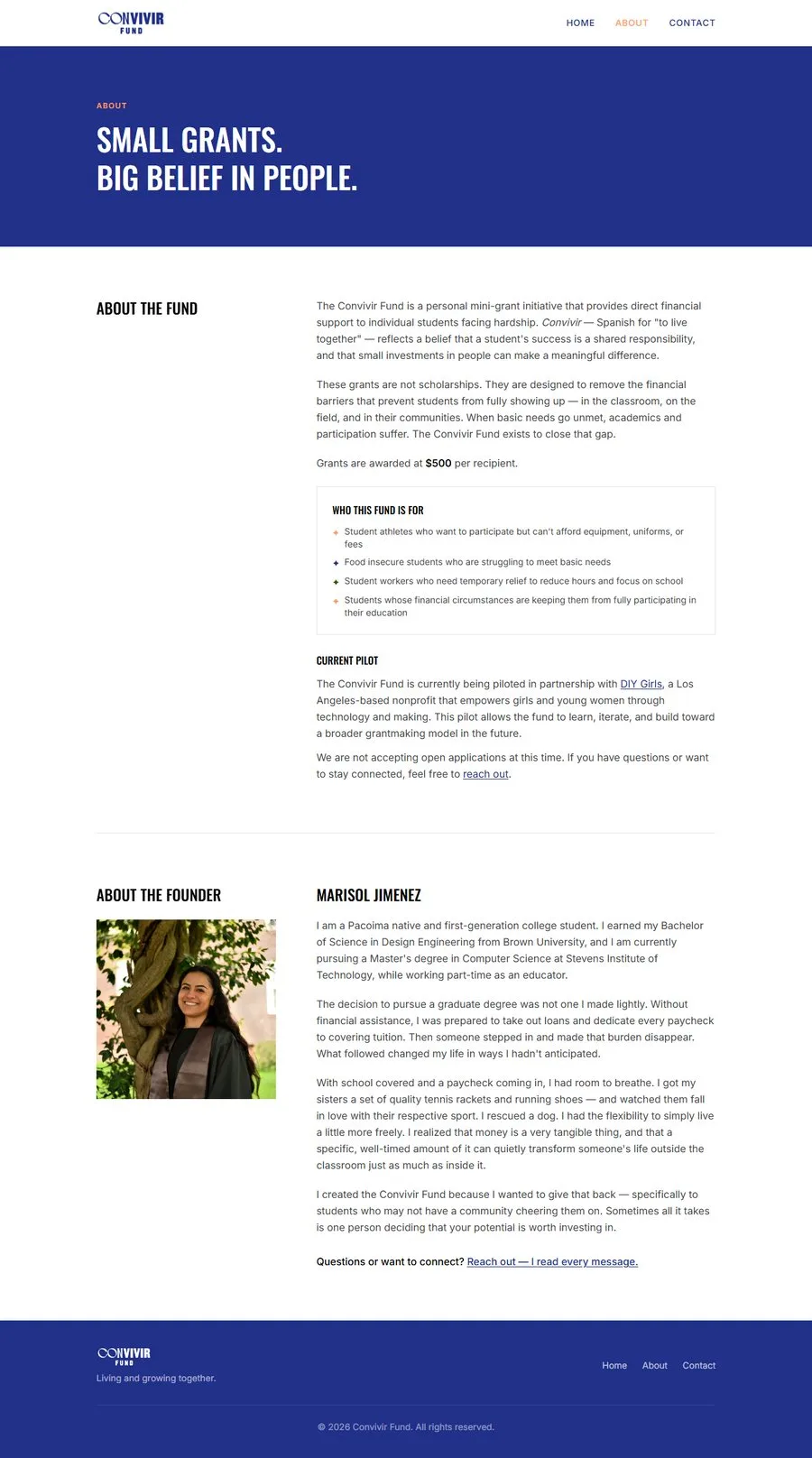
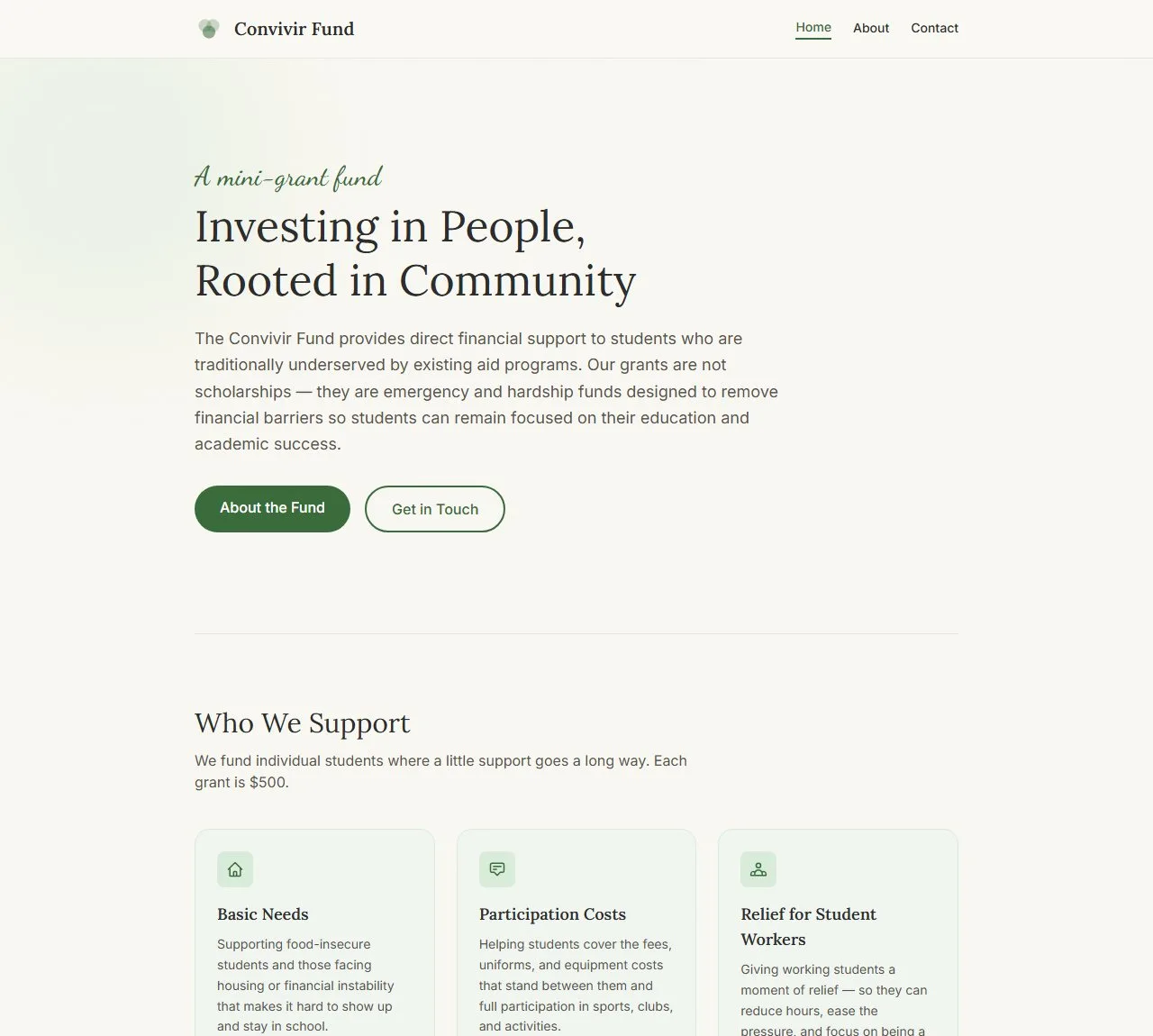 Before · AI-generated After · current site
The first identity looked too much like another fund I'm connected to.
Mai's first brand guide used black, neon lime, and heavy all-caps type. Once I applied it to the site, I realized it looked a lot like another fund I'm affiliated with. When two funds look alike, people may assume one copied the other or that they're the same organization, and I wanted Convivir to stand on its own, so I asked Mai for a revision. Her second brand guide moved to navy, orange, and a condensed typeface.
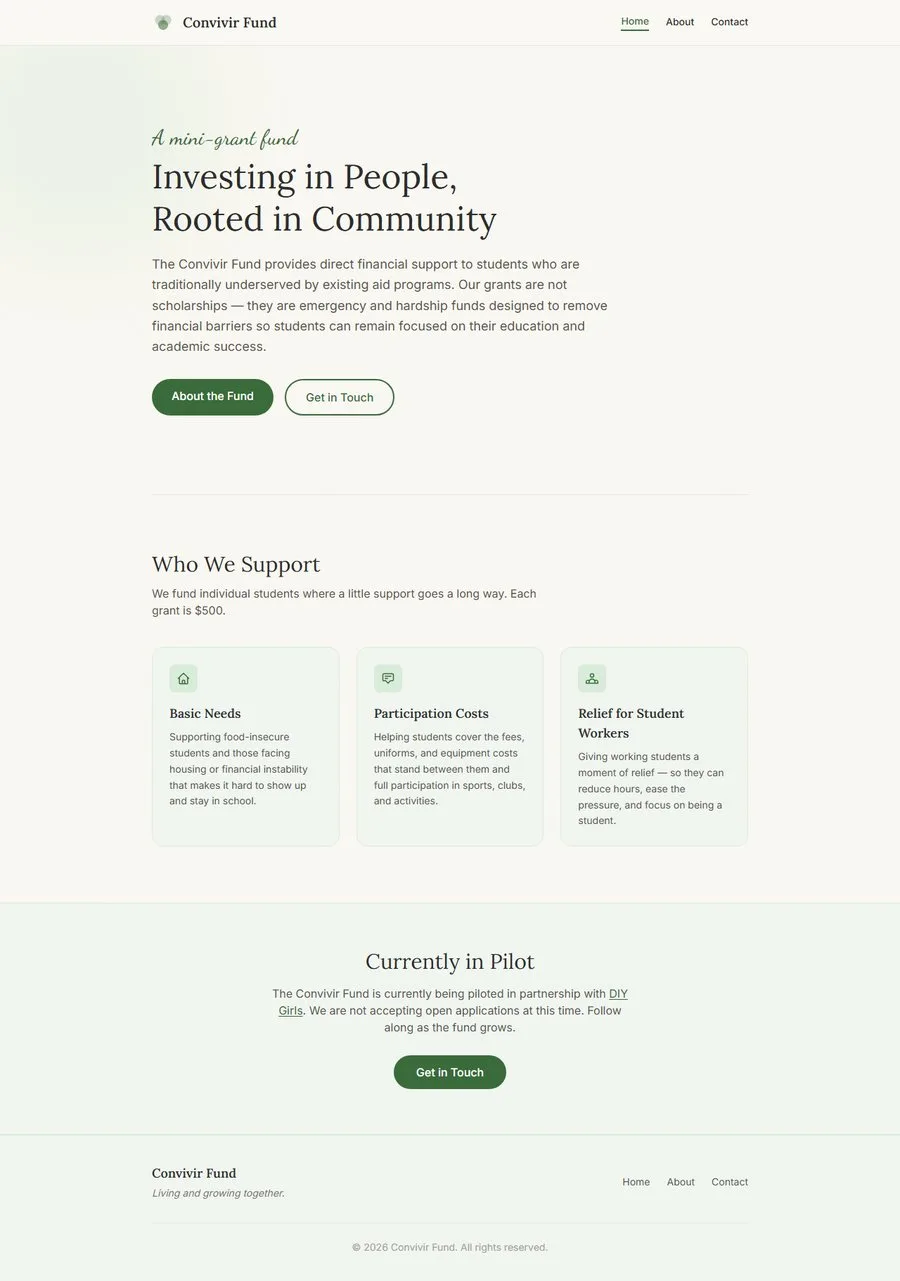
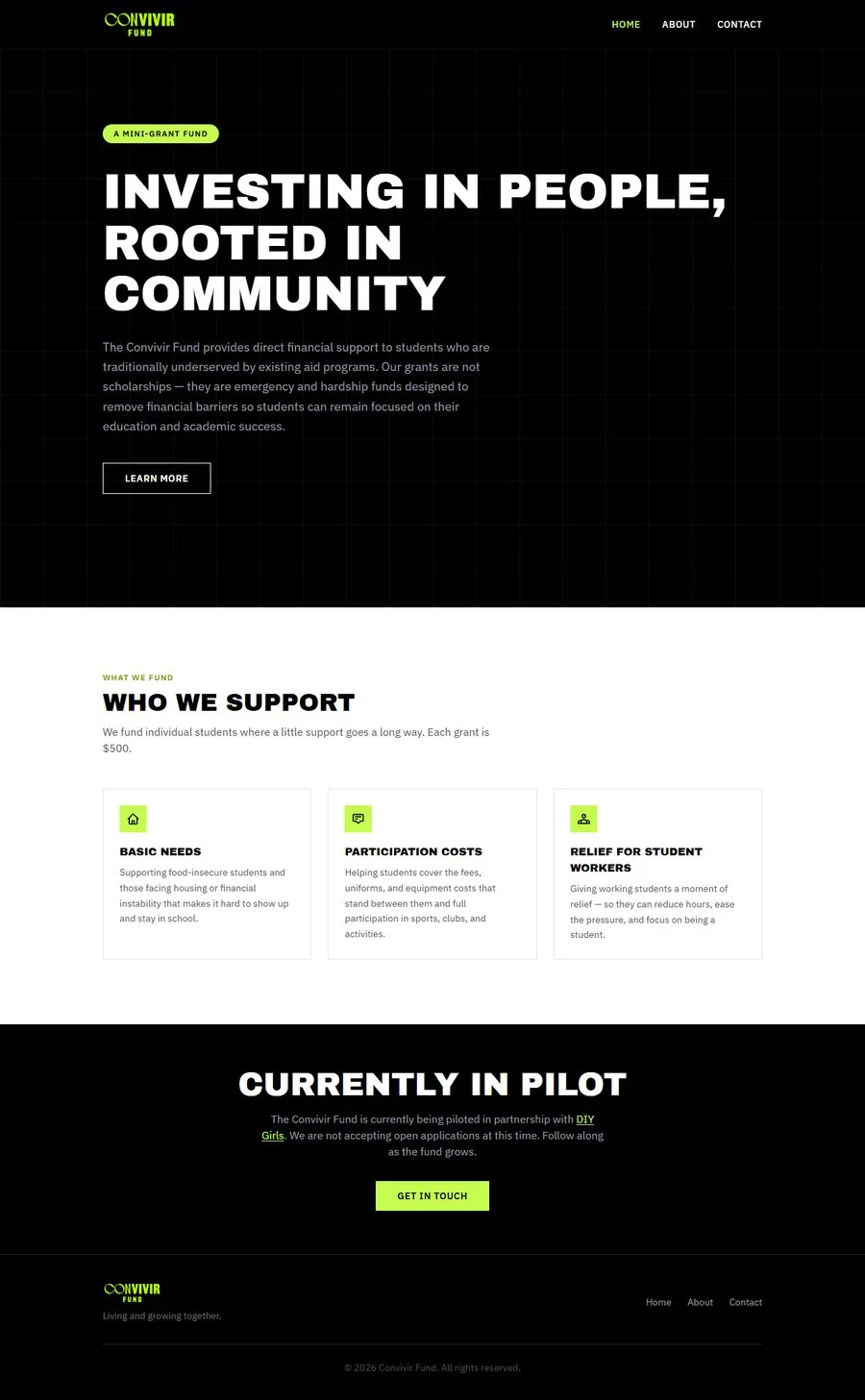
Mai and I each had a clear part. She designed the identity, a vector logo in several colorways and a brand guide covering fonts and colors, and I handled the code. I added the logo files, had Claude Code apply the brand guide's fonts and colors across every page, component, and the contact form, and reviewed the results page by page. The site is built with Astro and Tailwind CSS and hosted on Netlify, with a serverless contact form that sends messages to email.
Award day
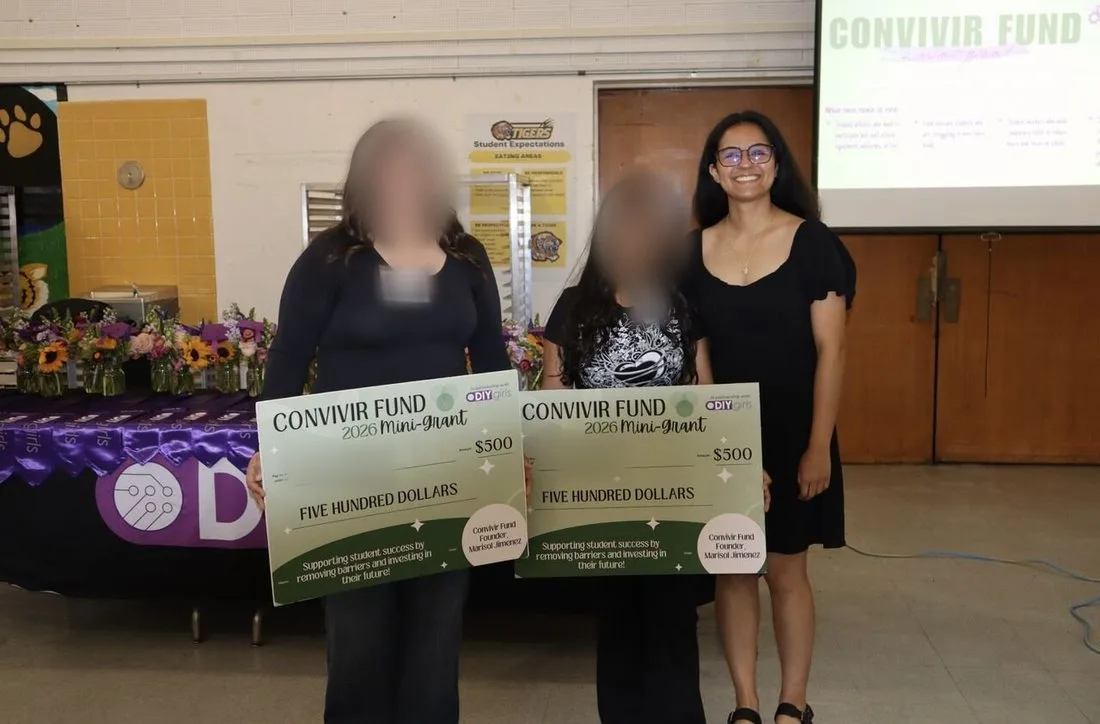
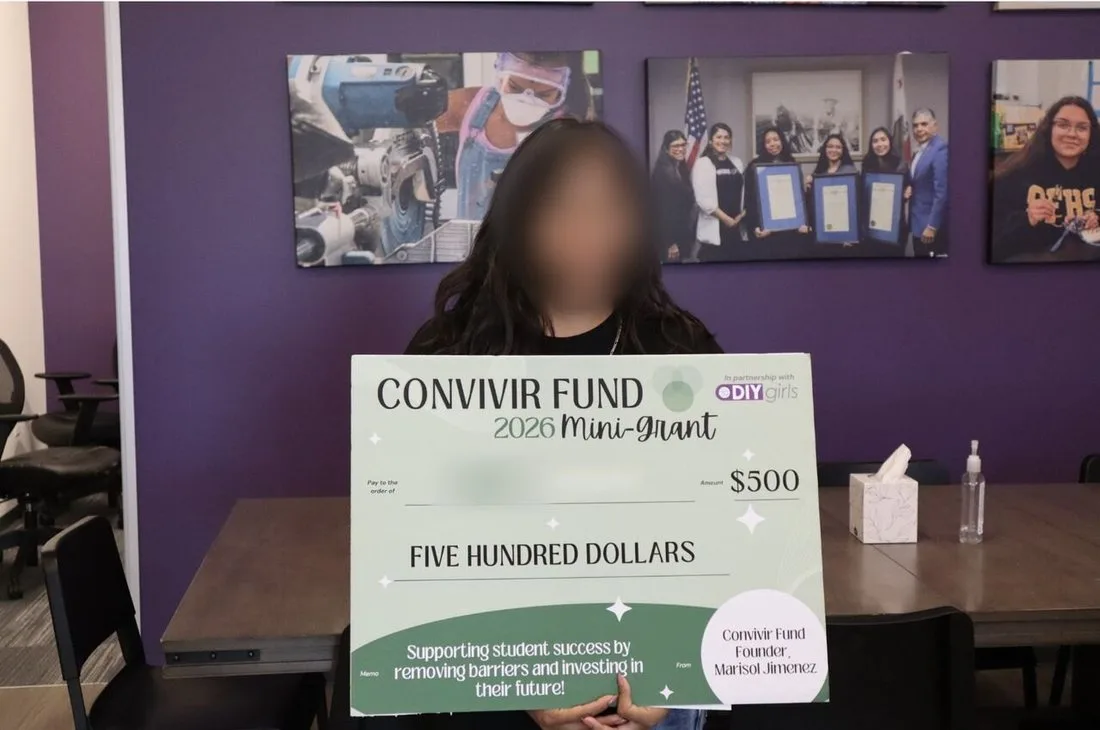
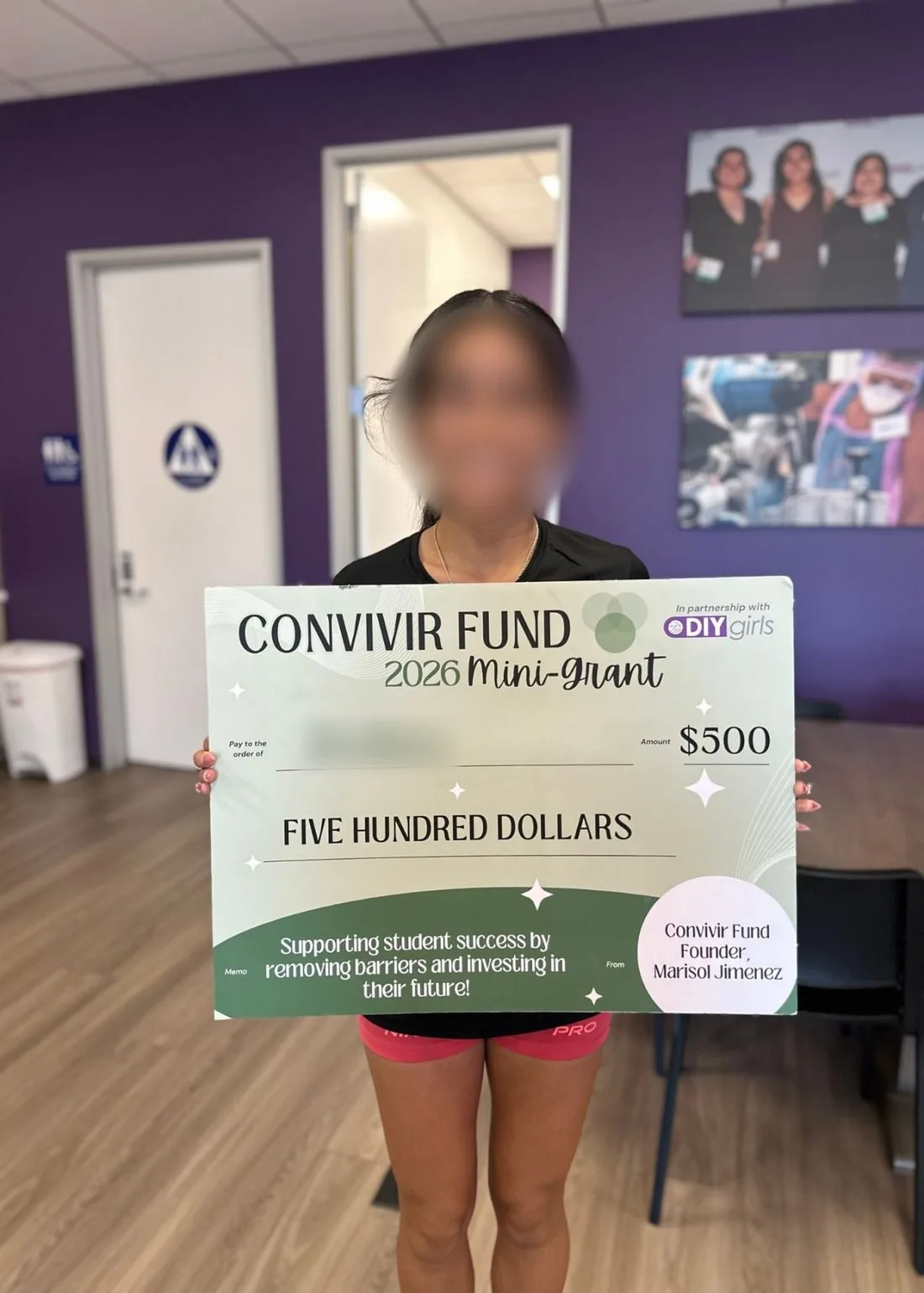
In the pilot year, the fund awarded four $500 grants, $2,000 in total, and we presented them at DIY Girls' STEM Expo. Parents came up to me afterward and called me an angel. One recipient couldn't make the ceremony because she was working, and it felt like a living example of why I created the fund in the first place.
Looking back, and what's next
Creating the program taught me that I couldn't wait for perfection. I'd been stuck for months trying to get everything right, but as soon as I found a real need, getting the actual program running was simpler than I expected.
Working with Mai taught me that there's more to a project than a working prototype. My first site worked, but it didn't feel like it could connect with anyone, and Mai helped me find the warmth and vibrancy I wanted, like the community the fund is meant to serve.
I plan to keep the fund going. I'm still funding it myself, and I recently received its first donation. The site is live at convivirfund.org.
Links
- convivirfund.org
- Source on GitHub
- Next case study: AI Assistant Builder